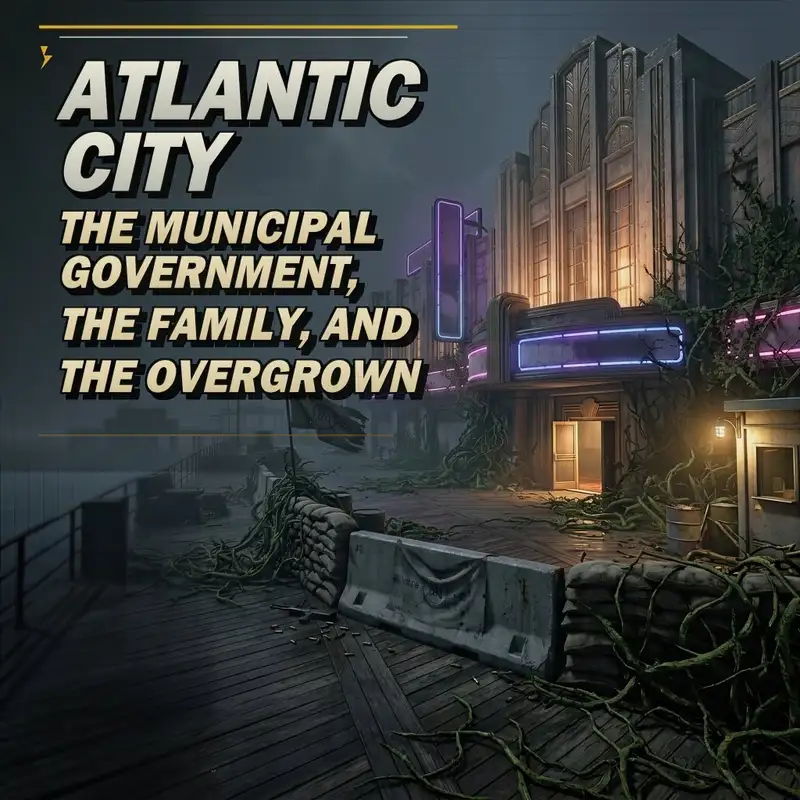
Atlantic City: The Municipal Government, the Family, and the Overgrown
The strategic value of studying Atlantic City comes from the choices it creates inside the earliest postwar decades in Appalachia, where surviving organizations tried to build security before the Scorched crisis destroyed the first regional order. At the center is expeditionary…
The strategic value of studying Atlantic City comes from the choices it creates inside the earliest postwar decades in Appalachia, where surviving organizations tried to build security before the Scorched crisis destroyed the first regional order. At the center is expeditionary warfare, city-state politics, local factions, and the struggle to project power beyond Appalachia, linking tactical choices to the ability of communities, states, or armed groups to continue operating. These campaigns show how regional forces must adapt when they enter political environments with their own economies, armed groups, and survival systems. The discussion stays with the named people, factions, places, and events supplied for this point in Fallout’s chronology. The surrounding chronology ultimately demonstrates how civil defense, factional rivalry, biological threat, scarce infrastructure, and improvised government determined which communities could endure after the bombs. Victory remains conditional, measured by whether a faction preserves enough manpower, resources, authority, and mobility to shape what follows. Visit ImaginedBattlefield.com for more military and science fiction.