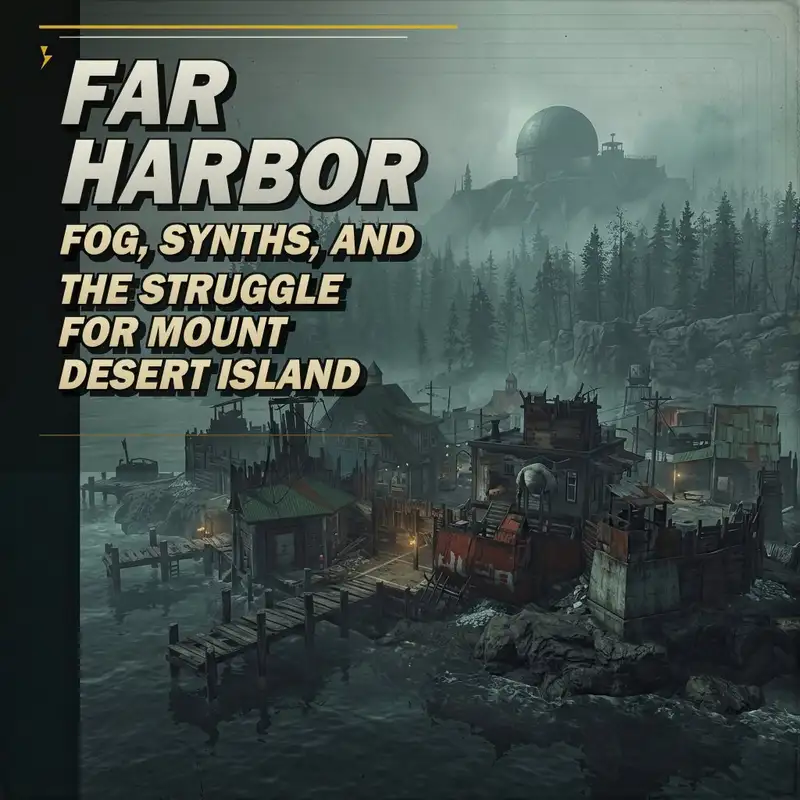
Far Harbor: Fog, Synths, and the Struggle for Mount Desert Island
The strategic value of studying Far Harbor comes from the choices it creates inside the Commonwealth war and the fractured western order that follows the games into the television-era conflicts. The analysis concentrates on clandestine technological power, synthetic personnel, i…
The strategic value of studying Far Harbor comes from the choices it creates inside the Commonwealth war and the fractured western order that follows the games into the television-era conflicts. The analysis concentrates on clandestine technological power, synthetic personnel, infiltration, coercion, and the military value of controlling advanced production underground, with attention to what leaders can know, mobilize, sustain, and risk. The Institute exercises power without holding much visible territory, relying on secrecy, teleportation, information, and specialized operatives. The discussion stays with the named people, factions, places, and events supplied for this point in Fallout’s chronology. The surrounding chronology ultimately demonstrates how secret institutions, citizen militias, professional occupiers, advanced technology, destroyed states, and competing claims to legitimacy leave the postwar world strategically unsettled. Victory remains conditional, measured by whether a faction preserves enough manpower, resources, authority, and mobility to shape what follows. Visit ImaginedBattlefield.com for more military and science fiction.