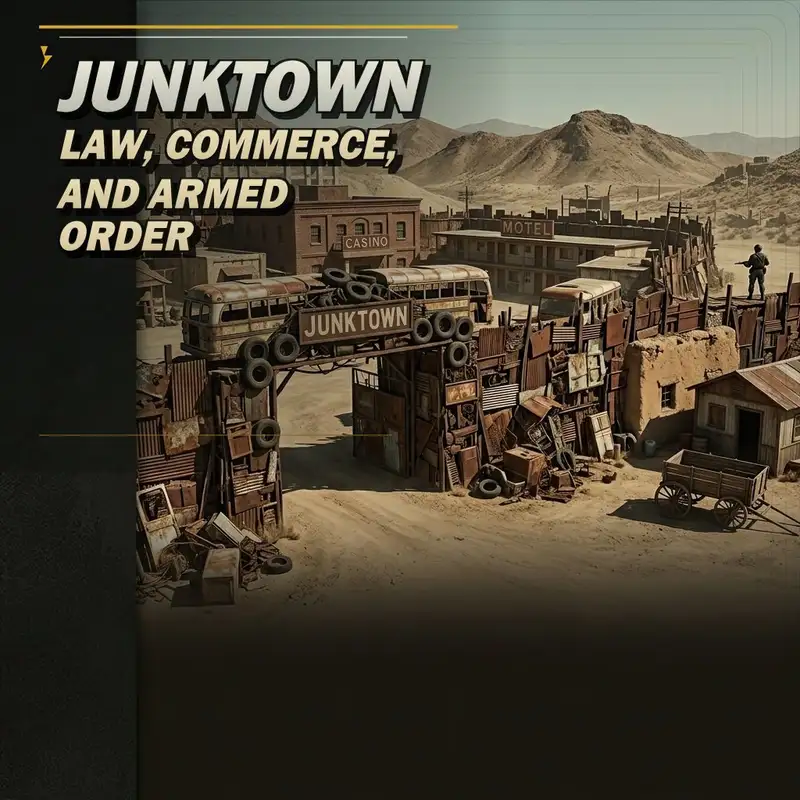
Junktown: Law, Commerce, and Armed Order
The importance of Junktown comes from its place in the rise of organized power in California, from the Vault Dweller’s era through the NCR and Enclave conflicts, where a local action can create consequences far beyond one battlefield. The analysis concentrates on urban fragmenta…
The importance of Junktown comes from its place in the rise of organized power in California, from the Vault Dweller’s era through the NCR and Enclave conflicts, where a local action can create consequences far beyond one battlefield. The analysis concentrates on urban fragmentation, trade, private armed power, caravans, and the gradual reconstruction of regional economic networks, with attention to what leaders can know, mobilize, sustain, and risk. These settlements matter because commerce creates routes, wealth, information, and security relationships that eventually support larger political institutions. The supplied chronology sets the boundary, so separate game and television developments are not silently merged beyond what the title itself establishes. Its position matters because the wider history shows how settlements became states by controlling trade, water, technology, territory, and armed force while confronting rivals that offered very different models of postwar order. Seen this way, the episode connects combat power to logistics, intelligence, legitimacy, infrastructure, and political purpose. Visit ImaginedBattlefield.com for more military and science fiction.