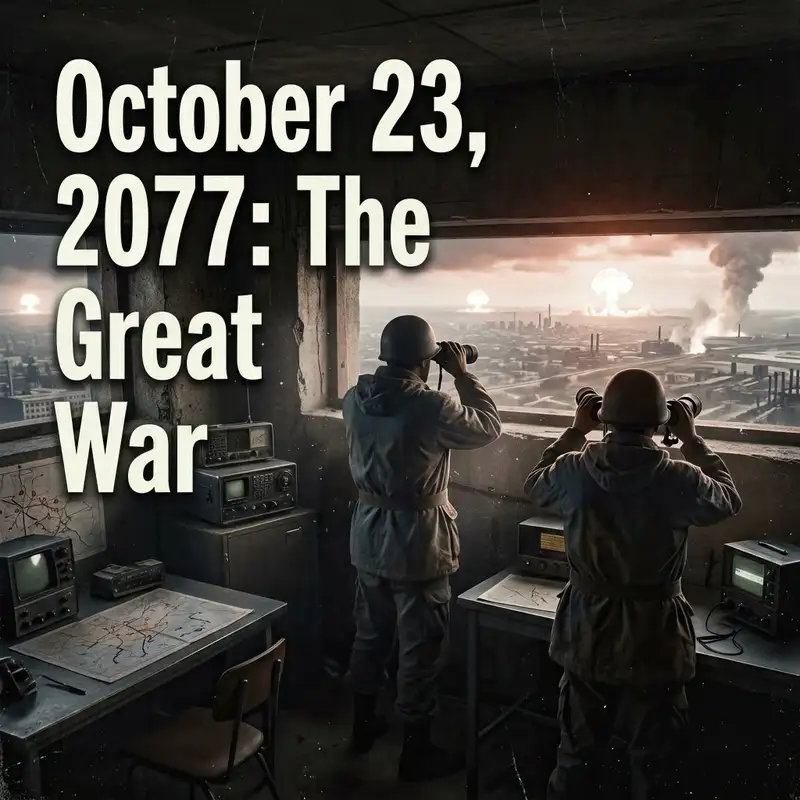
October 23, 2077: The Great War
The strategic value of studying October 23, 2077 comes from the choices it creates inside Fallout’s prewar United States, the Resource Wars, the Sino-American conflict, and the institutional failures that culminated in nuclear destruction. The analysis concentrates on nuclear de…
The strategic value of studying October 23, 2077 comes from the choices it creates inside Fallout’s prewar United States, the Resource Wars, the Sino-American conflict, and the institutional failures that culminated in nuclear destruction. The analysis concentrates on nuclear deterrence, escalation, uncertainty, command decisions, and the collapse of a strategic system built around mutual destruction, with attention to what leaders can know, mobilize, sustain, and risk. The Great War matters because deterrence fails completely: once strategic exchange begins, military victory becomes almost meaningless compared with the destruction of the societies being defended. The supplied chronology sets the boundary, so separate game and television developments are not silently merged beyond what the title itself establishes. Its position matters because the wider history shows how resource scarcity, corporate power, militarization, technological escalation, and continuity planning steadily narrowed the political space for avoiding catastrophe. Victory remains conditional, measured by whether a faction preserves enough manpower, resources, authority, and mobility to shape what follows. Visit ImaginedBattlefield.com for more military and science fiction.