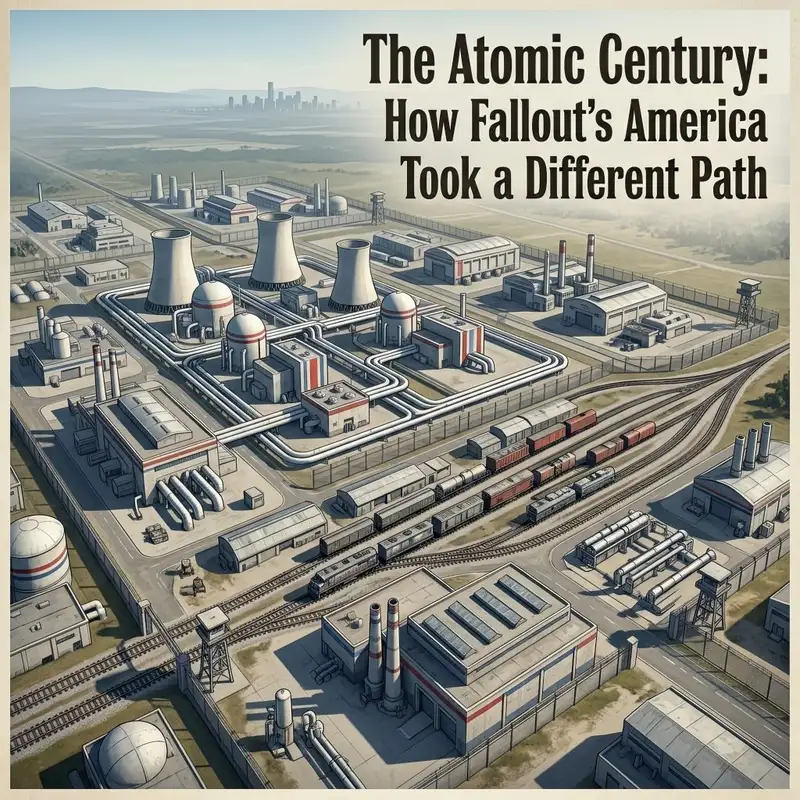
The Atomic Century: How Fallout’s America Took a Different Path
The military significance of The Atomic Century is clearest when placed inside Fallout’s prewar United States, the Resource Wars, the Sino-American conflict, and the institutional failures that culminated in nuclear destruction. That makes resource scarcity, industrial dependenc…
The military significance of The Atomic Century is clearest when placed inside Fallout’s prewar United States, the Resource Wars, the Sino-American conflict, and the institutional failures that culminated in nuclear destruction. That makes resource scarcity, industrial dependence, economic pressure, and the conversion of competition over energy into military confrontation central to understanding the immediate crisis and the wider conflict around it. Fallout’s old world becomes more dangerous as governments treat strategic resources as security problems, making coercion and war increasingly attractive responses to economic decline. Because Fallout contains divergent outcomes and later reinterpretations, the episode preserves the supplied framing rather than inventing one universal ending. Across the season, the larger issue is that resource scarcity, corporate power, militarization, technological escalation, and continuity planning steadily narrowed the political space for avoiding catastrophe. The broader lesson is that technological superiority remains fragile when supply, alliances, information, or public legitimacy fail beneath it. Visit ImaginedBattlefield.com for more military and science fiction.