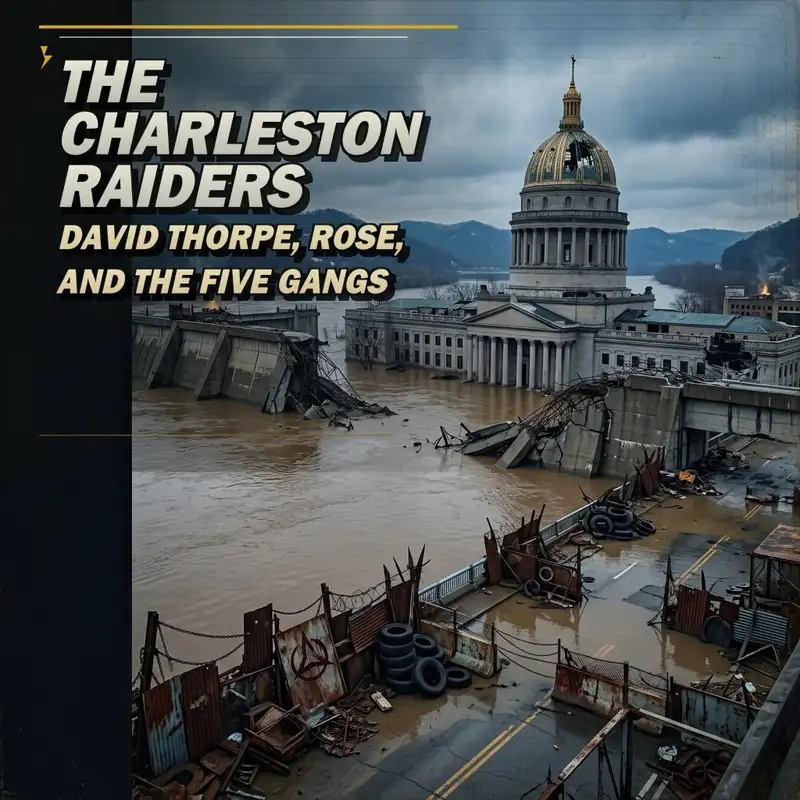
The Charleston Raiders: David Thorpe, Rose, and the Five Gangs
The military significance of The Charleston Raiders is clearest when placed inside the earliest postwar decades in Appalachia, where surviving organizations tried to build security before the Scorched crisis destroyed the first regional order. The analysis concentrates on raider…
The military significance of The Charleston Raiders is clearest when placed inside the earliest postwar decades in Appalachia, where surviving organizations tried to build security before the Scorched crisis destroyed the first regional order. The analysis concentrates on raider warfare, political fragmentation, infrastructure attack, and the vulnerability of postwar communities to leaders willing to weaponize destruction, with attention to what leaders can know, mobilize, sustain, and risk. The fall of Charleston shows that surviving the bombs does not create durable order when local factions can still destroy the systems everyone depends on. The supplied ordering and terminology are preserved, including distinctions among game outcomes, regional histories, and television-era developments. Placed in sequence, the topic advances the season’s concern with how civil defense, factional rivalry, biological threat, scarce infrastructure, and improvised government determined which communities could endure after the bombs. The result is a study of what a decision solves immediately, what it costs later, and how it changes the next strategic problem. Visit ImaginedBattlefield.com for more military and science fiction.