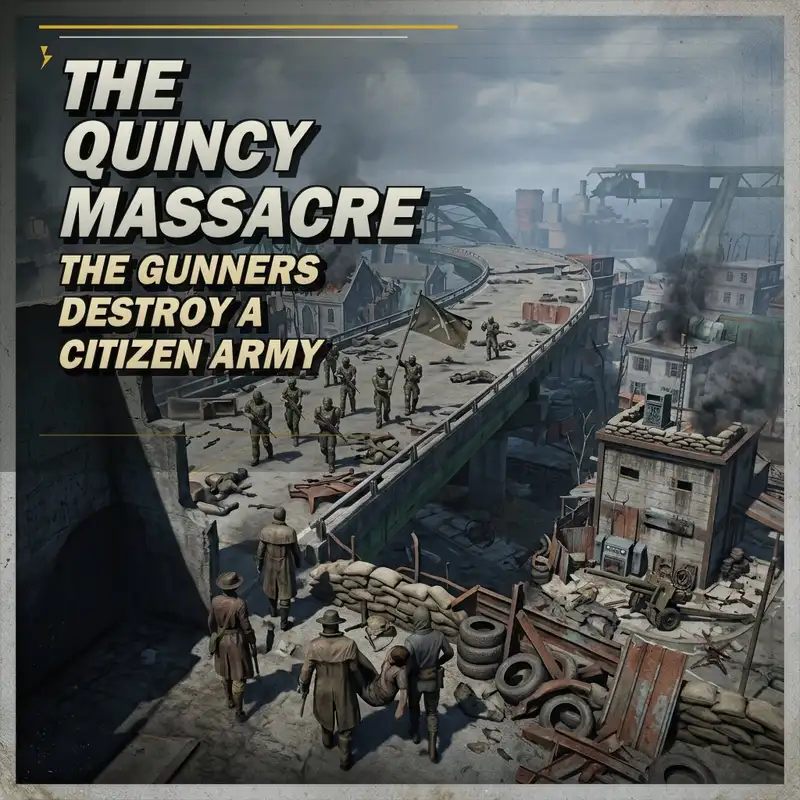
The Quincy Massacre: The Gunners Destroy a Citizen Army
The Quincy Massacre turns part of the Commonwealth war and the fractured western order that follows the games into the television-era conflicts into a concrete problem of command, survival, and political control. At the center is citizen militia, mutual defense, decentralized co…
The Quincy Massacre turns part of the Commonwealth war and the fractured western order that follows the games into the television-era conflicts into a concrete problem of command, survival, and political control. At the center is citizen militia, mutual defense, decentralized command, fortification, and the problem of rebuilding trust after institutional collapse, linking tactical choices to the ability of communities, states, or armed groups to continue operating. The Minutemen’s strength depends on voluntary cooperation among settlements, which makes legitimacy and responsiveness as important as weapons. Because Fallout contains divergent outcomes and later reinterpretations, the episode preserves the supplied framing rather than inventing one universal ending. Its position matters because the wider history shows how secret institutions, citizen militias, professional occupiers, advanced technology, destroyed states, and competing claims to legitimacy leave the postwar world strategically unsettled. That perspective keeps the emphasis on military consequences while showing why Fallout’s wars are shaped as much by institutions and scarcity as by weapons. Visit ImaginedBattlefield.com for more military and science fiction.