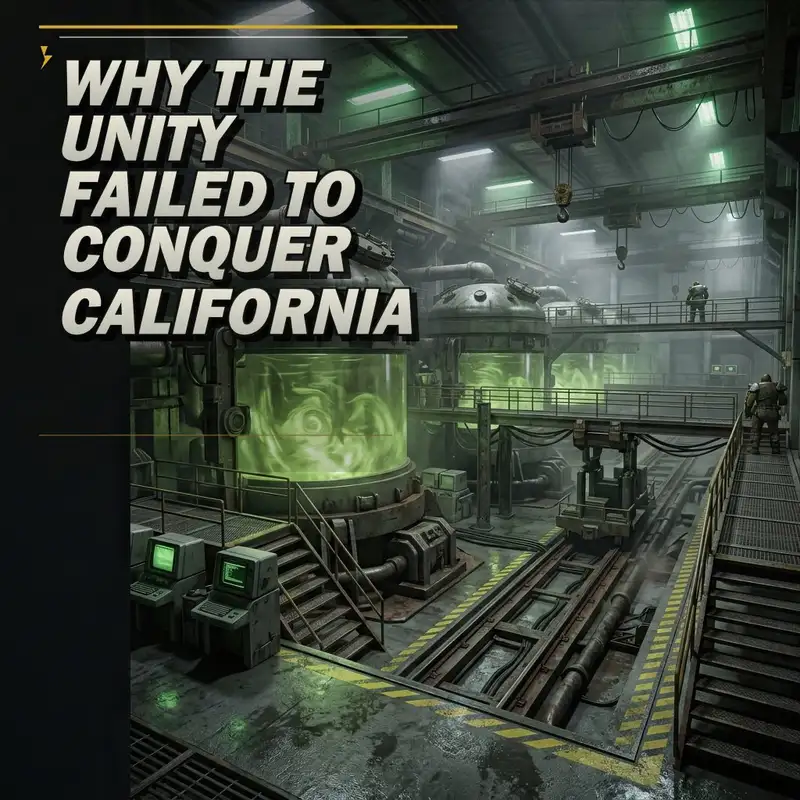
Why the Unity Failed to Conquer California
The strategic value of studying Why the Unity Failed to Conquer California comes from the choices it creates inside the rise of organized power in California, from the Vault Dweller’s era through the NCR and Enclave conflicts. The analysis concentrates on ideological conquest, c…
The strategic value of studying Why the Unity Failed to Conquer California comes from the choices it creates inside the rise of organized power in California, from the Vault Dweller’s era through the NCR and Enclave conflicts. The analysis concentrates on ideological conquest, covert recruitment, forced transformation, and the attempt to replace fragmented humanity with a unified posthuman order, with attention to what leaders can know, mobilize, sustain, and risk. The Unity combines religion, espionage, and military force, making its campaign a political project as much as a conventional war. Because Fallout contains divergent outcomes and later reinterpretations, the episode preserves the supplied framing rather than inventing one universal ending. Across the season, the larger issue is that settlements became states by controlling trade, water, technology, territory, and armed force while confronting rivals that offered very different models of postwar order. Seen this way, the episode connects combat power to logistics, intelligence, legitimacy, infrastructure, and political purpose. Visit ImaginedBattlefield.com for more military and science fiction.